


Murmures
Zélie Asava: mixed-race identities and representation in Irish, U.S. and French cinemas
mars 2015 | Sortie de film, livre, album... | Cinéma/TV | Irlande
Source : African Women in Cinema Blog
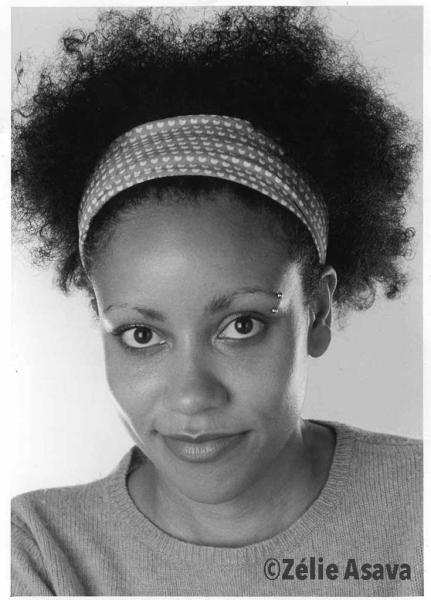
© Zélie Asava
Français
Interview with Zélie Asava by Beti Ellerson, February 2015.
Zélie Asava of Irish-Kenyan parentage with English citizenship, is a lecturer in film and media theory and national cinemas at Dundalk IT and University College Dublin. She explores mixed-raced identities and its representation in Irish, U.S. and French cinemas.
Zélie could you talk a bit about yourself?
I was born in Dublin to Irish and Kenyan parents. Having lived in London previously, they decided to raise me there. As an adult I moved back to Ireland, to go home and develop my career in academia. While, Dublin is a fascinating city with a great cultural scene, I found the experience much more troubling than anticipated due to the growth in racism during the economic boom of the late ‘90s/early 2000s (see my piece for The Evening Herald newspaper).
As an undergraduate, I became involved in student anti-racism movements at University College Dublin and Trinity College Dublin, and worked with community groups. During my MA at the University of Sussex and PhD at University College Dublin I studied the representations of black and mixed-race characters in French and American cinema, while pursuing work as an actress and journalist. In my professional life I have also worked in politics and equal opportunities consultancy, and lived in Canada and France, before becoming a lecturer.
How has your identity influenced your interest in racial representations?
This personal and academic experience prompted me to explore what it meant to be black and Irish from a theoretical and social perspective. I studied the history of black and mixed-race people in Ireland and their representation onscreen, and began to develop research papers on the subject which finally became the book, The Black Irish Onscreen: Representing Black and Mixed-Race Identities on Irish Film and Television (Peter Lang, 2013).
READ MORE ON http://africanwomenincinema.blogspot.fr/2015/02/zelie-asava-mixed-raced-identities-and.html
Zélie could you talk a bit about yourself?
I was born in Dublin to Irish and Kenyan parents. Having lived in London previously, they decided to raise me there. As an adult I moved back to Ireland, to go home and develop my career in academia. While, Dublin is a fascinating city with a great cultural scene, I found the experience much more troubling than anticipated due to the growth in racism during the economic boom of the late ‘90s/early 2000s (see my piece for The Evening Herald newspaper).
As an undergraduate, I became involved in student anti-racism movements at University College Dublin and Trinity College Dublin, and worked with community groups. During my MA at the University of Sussex and PhD at University College Dublin I studied the representations of black and mixed-race characters in French and American cinema, while pursuing work as an actress and journalist. In my professional life I have also worked in politics and equal opportunities consultancy, and lived in Canada and France, before becoming a lecturer.
How has your identity influenced your interest in racial representations?
This personal and academic experience prompted me to explore what it meant to be black and Irish from a theoretical and social perspective. I studied the history of black and mixed-race people in Ireland and their representation onscreen, and began to develop research papers on the subject which finally became the book, The Black Irish Onscreen: Representing Black and Mixed-Race Identities on Irish Film and Television (Peter Lang, 2013).
READ MORE ON http://africanwomenincinema.blogspot.fr/2015/02/zelie-asava-mixed-raced-identities-and.html
Partager :

